Research Notes
A focused collection of sources makes an AI research session easier to audit. Build the packet around one question rather than importing everything you have.
Write a question with a boundary
“Research onboarding” is difficult to finish. “Which steps in our current onboarding checklist lack an owner?” has a boundary and an output. List the documents needed to answer it: the current checklist, role definitions and the most recent process update. Keep superseded versions separate instead of silently mixing them into the evidence.
Give documents useful labels
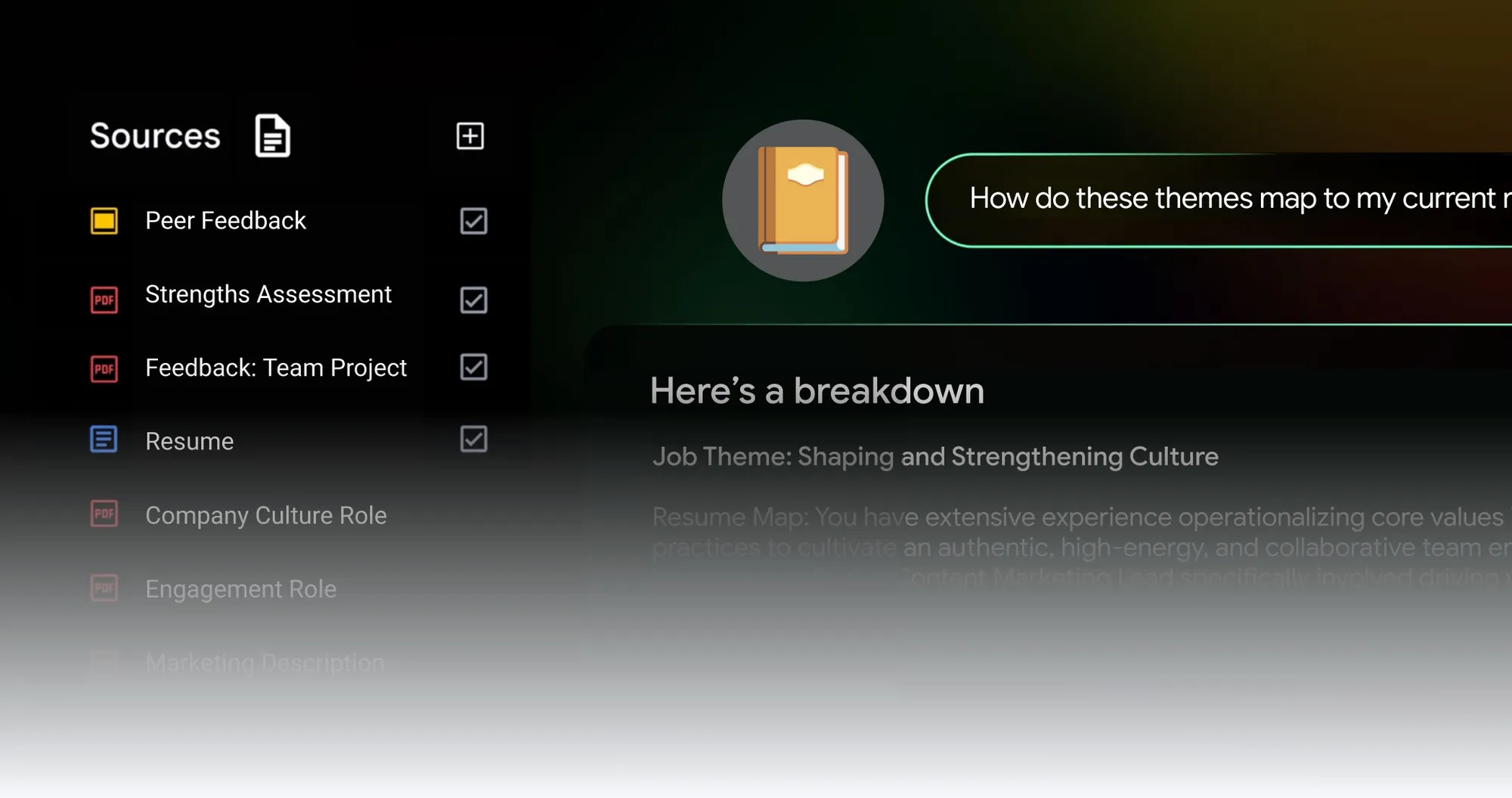
Include the document title, version or date and whether it is an approved source or an informal note. Google’s published NotebookLM example shows a Sources panel with selected and unselected documents. The screenshot illustrates that distinction; it is not a screenshot from our own account. Your available controls may differ by version.
Ask for gaps before conclusions
A useful first question is which parts of your question cannot be answered from the selected materials. The response may itself miss gaps, so check the list against the source inventory. If an ownership document is absent, the next step is to obtain it, not to ask the model to guess the most likely owner.
Keep an evidence log outside the chat
Record a claim, the relevant document and passage, and any qualification. That record remains usable when the chat is restarted or the source set changes. If you add a new document, mark which conclusions need another review. For confidential material, first confirm that your organisation permits uploading it to the service and account you are using.
An example to adapt
Question: Which steps in this onboarding checklist lack an explicitly named owner?
Use only the selected documents. Return the step, stated owner, source reference and uncertainty. Distinguish “not found in these documents” from “no owner exists”. Before the table, list documents that appear outdated or contradictory.
Illustrative starting point. Adapt it to your inputs, permissions and review process.
Before you use it
- The question has a clear scope.
- Old and current versions are distinguishable.
- Missing evidence is not treated as a negative fact.
- Important conclusions are checked in the original documents.