Everyday Tasks
Once the actions are confirmed, an AI assistant can help draft a concise follow-up. The trick is to prevent the writing pass from changing the commitments.
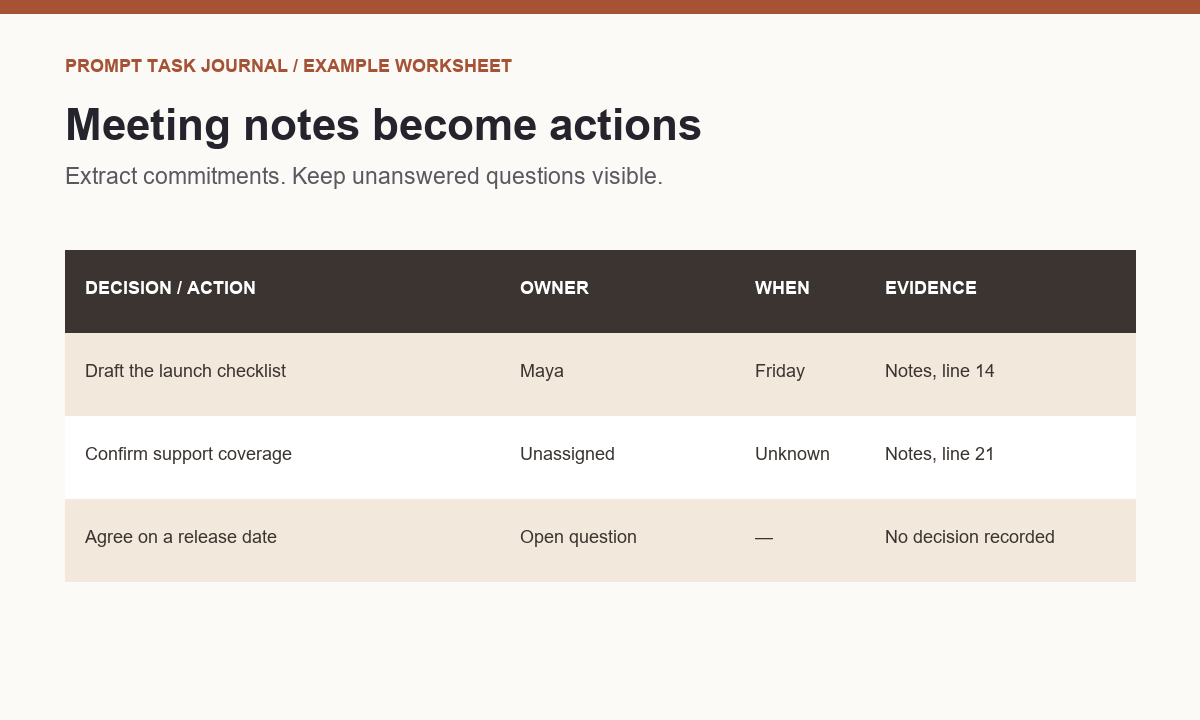
Prepare the source of truth
Use a table that participants have already checked. Include the task, owner, deadline and any dependency. Mark unresolved items separately. Remove private side comments before supplying the material. A drafting tool should not decide which tentative discussions became commitments.
Specify the reader’s next step
Tell the model whether recipients should acknowledge an assignment, resolve a question or simply keep the update for reference. This determines the subject line and opening sentence. Avoid generic openings that bury the action. A brief email can still be complete if the detailed table is linked or included underneath.
Check for accidental escalation
Polished language can change “please review” into “must complete”, or a provisional date into a promise. Compare the verbs and deadlines against the table. Keep dependencies explicit: a task due after approval is not necessarily due on a fixed date. Ask for plain language without stronger commitments than the source contains.
Review before sending
Verify recipients, links and attachments in your email client. An AI-produced draft is not authorisation to send it. If the audience includes people who were not at the meeting, add just enough context to explain the decision. Save a copy of the approved table alongside the message so later questions can be resolved.
An example to adapt
Draft a follow-up email from this approved action table. Keep owners, deadlines and commitment strength unchanged. Open with the purpose, then list confirmed actions and unresolved questions separately. Do not add promises. End by asking recipients to flag factual corrections by [review deadline]. Return a draft only.
Illustrative starting point. Adapt it to your inputs, permissions and review process.
Before you use it
- The source table is approved.
- Commitment strength is unchanged.
- Recipients and links are checked.
- A person reviews the final message before sending.